Monday, October 19, 2026

The Elements That Make Us

 The Elements That Make Us

So, the next time you look up at the stars, remember: you're made of the same stuff they are.

The Elements That Make Us 

Chlorine (Cl) 0.2% 

Phosphorus (P) 1% 

Calcium (Ca) 1.5% 

Sulphur (S) 0.3% 

Magnesium (Mg) 0.1%

Na Sodium (Na) 0.2%

Potassium (K) 0.4%

Hydrogen (H) 9.5% 

Nitrogen (N) 3.2%

Oxygen (O) 65%

Carbon (C) 18.5%

Humans are composed primarily of six major elements that account for approximately 99% of the body's mass: 

Oxygen (65%), 

Carbon (18.5%), 

Hydrogen (9.5%), 

Nitrogen (2.6%), 

Calcium (1.3%), and 

Phosphorus (0.6%).  

These elements form the foundational structures of life, including water, proteins, DNA, and bone tissue. 


Five additional elements make up about 0.85% of body mass and are essential for physiological functions: Sulfur, Potassium, Sodium, Chlorine, and Magnesium.  

Sulfur is critical for protein structure, 

while Potassium, Sodium, and Chlorine regulate nerve signals and fluid balance.

 Magnesium supports enzyme function and bone health.


The remaining mass consists of trace elements such as Iron, Zinc, Copper, and Iodine.

 Iron is vital for oxygen transport in hemoglobin,

 Zinc aids in cell repair and immune function, 

and Iodine is necessary for thyroid hormone production. 

Nearly all these elements were forged in ancient stars and dispersed through supernovae, meaning humans are literally made of stardust. 

孝顺父母是你自己的事

与多个兄弟姐妹没有关系

Being filial to your parents is your own personal responsibility; it has nothing to do with how many siblings you have.

孝敬父母是你个人的责任,这与你有多少兄弟姐妹无关。

Xiàojìng fùmǔ shì nǐ gèrén de zérèn, zhè yǔ nǐ yǒu duōshǎo xiōngdì jiěmèi wúguān.

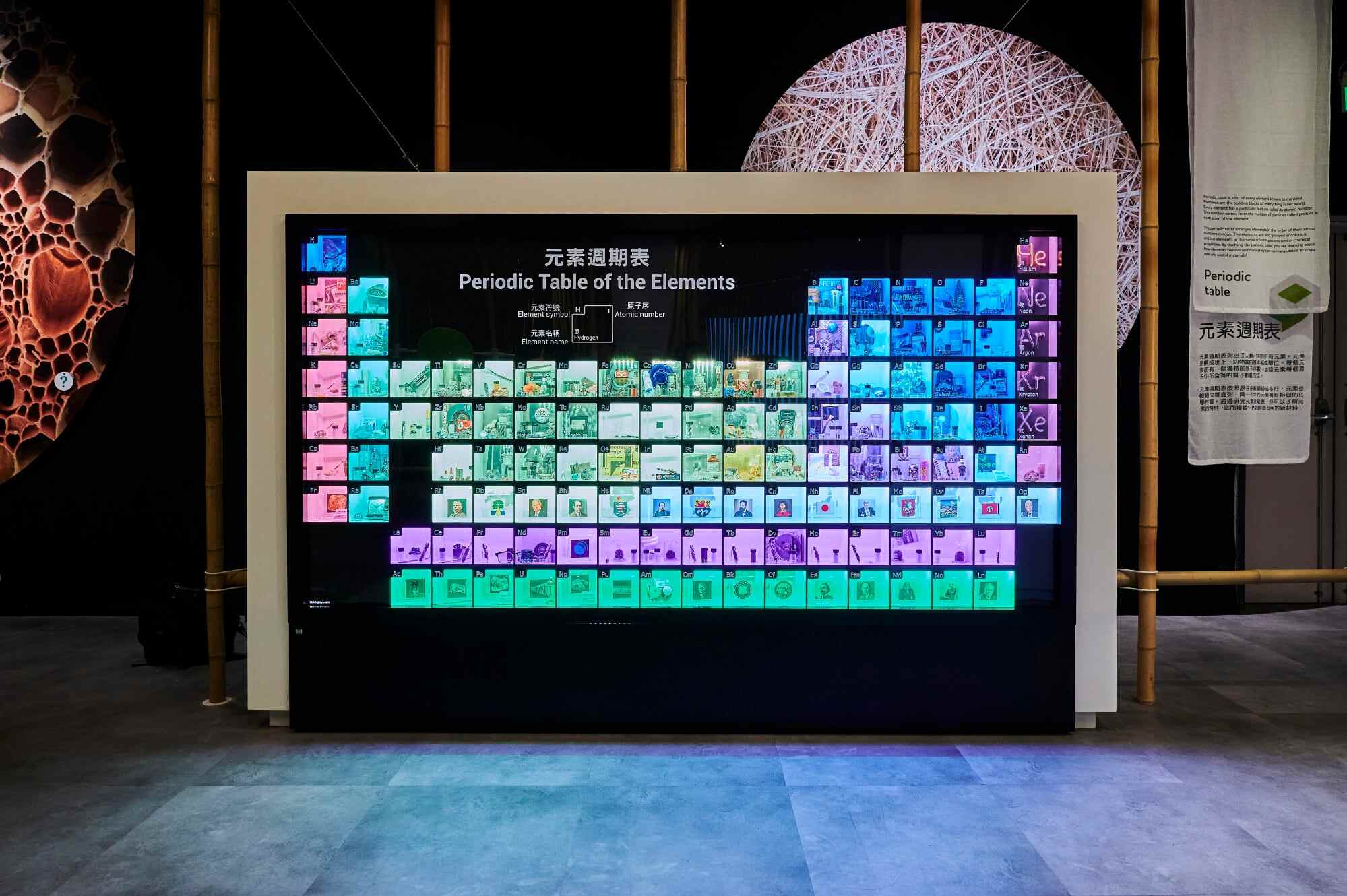
Examining the periodic table of elements and how they build life – and our bodies

Humans consist mostly of four elements: oxygen, carbon, hydrogen and nitrogen, which form everything from proteins to DNA Calcium strengthens bones and teeth, while potassium and sodium ensure our muscles work well

Humans are made of many chemical elements that work together to create our complex bodies. The elements are like pieces of a puzzle, each playing a unique and essential role in maintaining our health.

At the heart of our biological composition are four elements: oxygen (O), carbon (C), hydrogen (H) and nitrogen (N). These account for 96.6 per cent of our body weight. These four elements work together to form the building blocks of life – they can create everything from proteins to DNA.

You might wonder why our bodies don’t just turn into gas, considering that we are mostly oxygen, hydrogen and nitrogen. That is because about 60 per cent of our body consists of water (H2O), which is made of oxygen and hydrogen atoms.

But these four elements cannot complete the whole puzzle of life. Our bodies require other elements, including non-metal elements such as phosphorus (P), sulphur (S) and chlorine (Cl), and metal elements like potassium (K), sodium (Na), calcium (Ca) and magnesium (Mg).

For example, calcium and phosphorus form a strong foundation for our bones and teeth, while potassium and sodium ensure that our muscles and nerves work well. 


Scientists have found that our bodies need 28 different elements to function properly. These are almost one-quarter of the periodic table and are mainly found in the first four periods.

Of these, 11 are essential elements that our bodies need in larger amounts: oxygen, carbon, hydrogen, nitrogen, phosphorus, sulphur, chlorine, potassium, sodium, calcium and magnesium.

The remaining 17 are trace elements needed in very small quantities. For example, iron is necessary for producing haemoglobin, a protein found in red blood cells that carries oxygen from the lungs to the rest of the body. Zinc helps our cells work properly, grow and repair themselves. It also helps our bodies absorb nutrients from food and build proteins.

Surprisingly, our bodies are quite similar to the Earth we live on. The elements that are essential for human life are also found in the Earth’s crust. 

The complex interplay of elements in the human body is a testament to how fascinating the natural world is. From the smallest trace elements to the largest building blocks, each piece of the puzzle is vital for creating and sustaining human life.

So the next time you look at the periodic table, remember that it is not just a chart of elements, but a blueprint for life itself.

The Periodic Table exhibit on display in the special exhibition “Material Tales – The Life of Things” at the Hong Kong Science Museum. Photo: Hong Kong Science Museum
The Periodic Table


Vue sur l'île Nouvelle

 Blaye Etoile & Clé de l'Ao 

Vue sur l'île Nouvelle 

L'Île Nouvelle est un espace naturel de près de 300 hectares, en cours de renaturation pour retrouver une forte biodiversité (faune, flore, milieux naturels). Il s'agit d'un un site majeur pour les oiseaux. Près de 190 espèces ont été recensées en 2018. 

Elle apparaît sur les cartes du début du XVIIIe siècle comme un banc de sable limoneux. Afin de renforcer les défenses du verrou de l'estuaire, un projet d'installation d'une batterie militaire y est envisagé en 1815, mais ne sera jamais mis en œuvre. Dénommée île du Fagnard sur le plan cadastral de 1832, elle est aussi appelée ile Sans Pain, nom populaire qui lui fut donné en raison des difficultés d'approvisionnement en hiver. Une maison accompagnée d'un bâtiment rural figurent sur le flanc ouest de l'île dès cette époque, à la tête d'une exploitation agricole comprenant essentiellement des terres et des pâturages. 

L'iîle étant menacée de disparition dans les années 1850 en raison de l'érosion due aux courants, les pouvoirs publics interviennent pour assurer sa préservation. Les travaux d'amélioration du chenal de navigation, avec la construction d'une digue reliant Sans Pain avec l'ile Boucheau en 1859-1862, puis cela aboutira à la fusion progressive des deux îles, l'ensemble prenant définitivement le nom d'île Nouvelle. 

La viticulture est déjà présente au milieu du XIXe siècle sur l'île, mais ce n'est qu'avec son acquisition par Lucien La Fonta en 1866 qu'elle connaît un développement important, consécutif à l'établissement d'une colonie agricole. La prospérité de l'entreprise vaut à son propriétaire d'être primé au concours général agricole de 1876 Ainsi, les besoins en main d'œuvre font passer en une vingtaine d'années la population de moins de 2O habitants (surnommés les "ilouts") à plus de 80 au début des années 1890. 

Le domaine de l'Île Sans Pain, appelé Château Lafonta, est vendu durant la Première guerre mondiale. Divers propriétaires exploitent cette terre par la suite. L'élevage y est préféré après les années 1950, puis la maisculture dans les années 1970. 

Les btiments sont abandonnés et partiellement ruinés. Rachetée par le Conservatoire du Littoral en 1991, l'île est confiée au Département de la Gironde qui en assure la gestion et la préservation dans le cadre de la politique des «espaces naturels sensibles ». Outre le projet de renaturation d'une partie de l'île et son ouverture au public, rendue possible par l'installation d'un débarcadère mis en service en 2008, la restauration des bâtiments a également été engagée dans les années 2010. 


Accédez à la fiche détaillée de l'ile pour en savoir plus! 

(c) Association Nous Autres (2019)


(English translation) 

Blaye Etoile & Clé de l'Ao

View of Île Nouvelle

Île Nouvelle is a natural area of nearly 300 hectares, currently undergoing restoration to regain its rich biodiversity (fauna, flora, natural habitats). It is a major site for birds. Nearly 190 species were recorded in 2018.

It appears on early 18th-century maps as a silty sandbank. In order to strengthen the defenses of the estuary's narrow passage, a project to install a military battery there was considered in 1815, but was never implemented. Named Île du Fagnard on the 1832 land registry map, it is also called Île Sans Pain (Breadless Island), a popular name given to it due to the difficulties of obtaining supplies in winter. A house and a farm building were present on the island's western side from this period, at the head of a farm consisting mainly of arable land and pasture.


The island was threatened with disappearance in the 1850s due to erosion caused by currents, and the authorities intervened to ensure its preservation. Work to improve the navigation channel, including the construction of a causeway linking Sans Pain with Île Boucheau between 1859 and 1862, eventually led to the gradual merging of the two islands, the whole finally taking the name Île Nouvelle (New Island).


Viticulture was already present on the island in the mid-19th century, but it was only with its acquisition by Lucien La Fonta in 1866 that it experienced significant development, following the establishment of an agricultural colony. The company's prosperity earned its owner an award at the 1876 General Agricultural Competition. As a result, the need for labor caused the population to grow from fewer than 20 inhabitants (nicknamed "ilouts") to over 80 by the early 1890s in about twenty years.

The Île Sans Pain estate, known as Château Lafonta, was sold during the First World War. Various owners subsequently farmed the land. Livestock farming became the preferred activity after the 1950s, followed by corn cultivation in the 1970s.

The buildings were abandoned and partially ruined. Purchased by the Conservatoire du Littoral (Coastal Conservancy) in 1991, the island was entrusted to the Gironde Department, which is responsible for its management and preservation within the framework of its "sensitive natural areas" policy. In addition to the project to restore part of the island to its natural state and open it to the public, made possible by the installation of a landing stage in operation since 2008, the restoration of the buildings also began in the 2010s.

Access the detailed island information sheet to learn more!

(c) Association Nous Autres (2019)


La falaise et les remparts présentaient des signes importants d'instabilité. Des blocs se détachaient de la paroi calcaire qui subit au quotidien les attaques conjugućes de l'érosion et des infiltrations liées à l'écoulement des eaux pluviales. La Ville a donc engagé un vaste programme de travaux (drainage, travaux de maçonnerie, extraction des végétaux qui fragilisaient les parois, cloutages, projection de béton, mise en place de filets et de contreforts,..) d'un montant de 2 813 000 € financé à hauteur de 1 765 635,95 € par différents partenaires(Etat,DRAC,Conseil Régional, Conseil Départemental et la Fondation du Patrimoine). 

Ces travaux, en plus de permettre la pérennisation de ce patrimoine, ont permis de rouvrir ce chemin en pied de Citadelle et ouvert sur la Gironde et les iles.

(English translation)

The cliff and ramparts showed significant signs of instability. Blocks were breaking away from the limestone face, which is subjected daily to the combined attacks of erosion and seepage from rainwater runoff. The City therefore undertook a vast program of works (drainage, masonry work, removal of vegetation weakening the walls, rock bolting, concrete spraying, installation of netting and buttresses, etc.) totaling €2,813,000, of which €1,765,635.95 was funded by various partners (the State, the Regional Directorate of Cultural Affairs (DRAC), the Regional Council, the Departmental Council, and the Heritage Foundation).

These works, in addition to ensuring the preservation of this heritage, have allowed the reopening of this path at the foot of the Citadel, which offers views of the Gironde estuary and the islands.

Vue sur lile Paté

View of Paté Island

L'île Paté abrite l'un des trois forts édifiés au XVIle siècle par Vauban afin de défendre la ville de Bordeaux: le Fort Paté. Il constitue avec le Fort Médoc et la Citadelle de Blaye, le triptyque défensif mis en place au XVIle siècle sur l'estuaire de la Gironde, pour défendre Bordeaux et son port. 

Au XVIle siècle, l'île se limite à un simple banc de sable lorsque Vauban décide d'en faire l'un des éléments de son triptyque défensif. 

Le 7 juillet 2008, le fort Paté (avec la Citadelle de Blaye et le Fort Médoc) est l'un des douze sites intégrés au Réseau des sites majeurs de Vauban, nouvellement promu au patrimoine mondial de l'UNESCO. 

Haut de 12 mètres, il est bâti sur un îlot long de 600 mètres. Le Fort Pâté, de forme circulaire, compte 32 meutrières, une poudrière et un corps de garde Ses murs sont épais de 4 mètres.  

L'objectif de ce tryptique est d'empêcher le passage des flottes ennemies en direction de Bordeaux. En effet, la portée de tir des canons ne permettant pas de couvrir les 3km de large de l'Estuaire à cet endroit, l'instauration du Verrou permet de le contrôler grâce aux tirs croisés. De fait, c'est un dispositif extrêmement dissuasif. 

CITADELLE DE BLAYE 

LAN 

RT deMozDs 

vath the 

DELRA 

aa 

ef BLAYE; 

Det'nd tePlane ete 

'FORT PÂTÉ 

三

ib 

R..o 

N 

E 

FORT MÉDC 

lle-Aquitaine, Inventaire générakl- Adrienne BARROCHE: (4) AD Gironde 

Copyright: (1,2) Région Nouvelle-Aquitaine, Inventaire général-Muchel DUBEAU:(3) Région Nou


Paté Island is home to one of the three forts built in the 17th century by Vauban to defend the city of Bordeaux: Fort Paté. Along with Fort Médoc and the Blaye Citadel, it forms the defensive triptych established in the 16th century on the Gironde estuary to protect Bordeaux and its port.

In the 16th century, the island was merely a sandbank when Vauban decided to make it one of the elements of his defensive triptych.

On July 7, 2008, Fort Paté (along with the Blaye Citadel and Fort Médoc) became one of the twelve sites included in the Network of Major Vauban Sites, newly designated a UNESCO World Heritage Site.

Standing 12 meters high, it is built on a 600-meter-long islet. The circular Fort Paté has 32 loopholes, a powder magazine, and a guardhouse. Its walls are 4 meters thick. The objective of this triptych was to prevent enemy fleets from passing towards Bordeaux. Indeed, since the cannons' firing range was insufficient to cover the 3km width of the estuary at this point, the "Lock" allowed for control through crossfire. In fact, it was an extremely effective deterrent.


CITADEL OF BLAYE

LAN

RT deMozDs

vath the

DELRA

aa

ef BLAYE;


Det'nd tePlane ete

'FORT PÂTÉ

三

ib

R..o

N 

E FORT MÉDC

Nouvelle-Aquitaine, General Inventory - Adrienne BARROCHE: (4) AD Gironde

Copyright: (1,2) Nouvelle-Aquitaine Region, General Inventory - Michel DUBEAU:(3) Nouvelle-Aquitaine Region

ATTENTION, VOUS ENTREZ DANS UNE ZONE NATURELLE

WARNING, YOU ARE ENTERING A NATURAL AREA


Merci de respecter le lieu, faune, sa flore, de ne pas cue les plantes et tenir les chie laisse.

Please respect the site, its wildlife, and its flora; do not pick plants, and keep dogs on a leash. 


Fire and extinguisher

 Classes of Fire 

There are Six Classes of Fire

 CLASS A  

combustible materials: flammable solids, such as  wood, paper, and fabric


combustible metals: chemicals such as magnesium, aluminum or potassium 

 CLASS B  

flammable liquids: petrol, turpentine or paint 

CLASS C  flammable gases: hydrogen, butane or methane 


 CLASS D  combustible metals: chemicals such as magnesium, aluminum or potassium 

CLASS E  electrical equipment: once the electrical item is removed, the fire changes class 

CLASS F  cooking oils: typically, a chip-pan fire.


Types of Fire Extinguishers 

Wet Chemical Extinguishers 

• Designed for used on Class F fires, involving cooking oil and fats 

• Can also be used on Class A fire 

• Label colour is yellow 

• Good for commercial kitchens and canteens


Carbon Dioxide (CO2) Extinguishers 

·Mainly designed for use on electrical fires 

·Can also be used on Class B fires 

·Works by suffocating fires by displacing the oxygen 

· Colour label is black 

· Ideal for computer server rooms and premises with electrical appliances and equipment


Foam Extinguishers 

• Most commonly used for Class B fires 

• Water based and can also be used on Class A fires 

• Should not be used for fires caused by flammable metals, kitchen fires and electrical fires 

• Work by creating cooling effect on the fuel 

• When poured on burning liquid, fire is extinguished by creating a barrier between the fuel and the flame 

• Label colour is cream


Water Extinguishers 

• Most commonly used for Class A fires a 

• Good for fires caused by various organic materials including fabric, textiles, coal, wood, cardboard and paper 

• Should not be used for kitchen fires, fires caused by flammable gas and liquids as well as fires that involve electrical equipment 

• Works by cooling effect on the burning fuel 

• Water mist extinguishers equipped with a different nozzle releases mist particles that suffocate the fire and also protect the user by creating a wall of mist 

• Label colour is red

Dry Powder Extinguishers 

• Also known as ABC extinguishers as it can be used for class A, B and C fires 

• Should not be used in enclosed space 

• Can be used on fires involving electrical equipment up to 1000 volts 

• Should not be used for fires involving cooking oil 

• Can be used for fires caused by flammable metals 

• Label colour is blue.


Chinese New Year LouHei Salad Plate Ingredients meaning

 Crackers 

满地黄金

Symbolises great wealth. This phrase means, Man Di Huang Jin "Floor full of gold", 

Evoque une immense fortune. Man Di Huang Jin se traduit par«un sol entièrement pavé d'or ». 


大艺人司

第帆厨酒

Roasted Sesame / Graines 

de sésame grillées 

金银满屋


Sprinkled to symbolise wealth. As the 

accompanying phrase goes, "Jin Yin Man Wu" 

This means "Household filled with gold and 

silver". 

En les saupoudrant, il faut prononcer<Jin Yin 

Man Wu»: Que l'or et l'argent remplissent le 

foyer tout au long de l'année! 

大吉大训

明家馍茶山泰

Lime / Citron et citron vert 

风生水起

"Fen Sheng Shui Qi" to have one's best 

wishes come like water and the wind. 

"Feng Sheng Shui Qi" est le souhait que tous 

les voeux se réalisent et que les bonnes 

choses arrivent naturellement, "comme l'eau et 

le vent! 

大言之州

满事仙

购春喜安临


Sunday, October 18, 2026

If you wish ...

 你想發財,想孩子優秀成績好,就要對父

母或公婆,岳父母盡孝,說話,辦事,要盡

力,恭敬老人家。要捨得對老人家好。


If you wish to attain wealth and see your children excel academically, you must show filial piety toward your own parents, as well as your parents-in-law. Be diligent and respectful in your words and actions toward them, and do not hesitate to treat them well.


Si vous souhaitez devenir riche et que vos enfants réussissent brillamment, vous devez faire preuve de piété filiale envers vos parents et beaux-parents. En paroles et en actes, vous devez vous efforcer de témoigner du respect aux personnes âgées. Vous devez avoir à cœur de bien les traiter.

9 timeless lessons 9. 什么是相对论?爱因斯坦曾打趣道:

 Albert Einstein once said: 

"Weak people revenge. Strong people forgive. Intelligent people ignore." 

Here are 9 timeless lessons I've learned from him: 

1. Don't Overthink the Future 

"I never think of the future. It comes soon enough." The future is uncertain, and worrying about it steals today's joy. Focus on what you have now and keep moving forward. 

2. Dare to Think Big 

"I believe bold speculation will take us further than the mere accumulation of facts." 

Daring ideas have changed the world more than safe ones ever could. 


3. Keep Moving Forward 

"Life is like riding a bicycle. To keep your balance, you must keep moving." 

Don't stand still. Progress, no matter how small, is still progress. 

4. Politics Is Harder Than Physics 

When asked, "If man discovered the atom, why can't we solve political problems?" 

Einstein answered: 

"Because politics is more difficult than physics." Brilliant minds still struggle where emotions, power, and ego take over. 

5. Embrace Simplicity 

Einstein believed in "Einstein's Razor"- removing what's unnecessary and holding on to what matters. Simplicity is power, as long as it doesn't become oversimplification.

6. Education Should Teach You to Think "The aim of education should be to train minds to think, not to memorize facts." 

So read more. Reflect more. Let your curiosity be your best teacher. 

7. We All Belong to One Tree 

"All religions, arts, and sciences are branches of the same tree." 

Humanity thrives when we grow together, not apart. We are more connected than we think. 

8. Stay True to Your Conscience 

"Never do anything against your conscience, even if the state demands it." 

Let your principles guide you - especially when it's not easy. 

9. What Is Relativity?

Einstein once joked: 

"Sit with a pretty girl for two hours and it feels like two minutes. Sit on a hot stove for two minutes and it feels like two hours - that's relativity." Perspective changes everything.

阿尔伯特·爱因斯坦曾说:


“弱者寻求报复,强者选择宽恕,智者则置之不理。”


以下是我从他身上学到的 9 条永恒的人生智慧:


1. 不要过度忧虑未来


“我从不去想未来,因为它来得很快。”未来充满不确定性,为之担忧只会剥夺当下的快乐。专注于你所拥有的,继续前行即可。


2. 敢于大胆构想


“我相信,大胆的推测比单纯的事实堆砌能带我们走得更远。”


那些大胆的构想,比稳妥的方案更能改变世界。


3. 持续前行


“人生就像骑自行车。为了保持平衡,你必须不断前行。”


不要停滞不前。进步,无论多么微小,终究是进步。


4. 政治比物理更复杂


当被问及“人类既然能发现原子,为何却解决不了政治问题?”时,


爱因斯坦回答道:


“因为政治比物理更难。”在情感、权力和自我意识主导的领域,即便是最卓越的头脑,也难免会感到棘手。


5. 拥抱简约


爱因斯坦推崇“奥卡姆剃刀”式的思维(即“爱因斯坦剃刀”):剔除不必要的冗余,坚守真正重要的核心。简约即力量,前提是不要将其简化为“过度简化”。


6. 教育应教会你思考


“教育的目的应当是培养思考能力,而非死记硬背事实。”


多阅读,多反思。让好奇心成为你最好的老师。


7. 我们同属一棵大树


“所有的宗教、艺术和科学,都是同一棵大树上的枝干。”


当人类共同成长而非彼此割裂时,文明才会繁荣。我们之间的联系,远比想象中更为紧密。


8. 坚守良知


“永远不要做违背良知的事,即便国家要求你这样做。”


让原则指引你——尤其是在处境艰难的时刻。


9. 什么是相对论?爱因斯坦曾打趣道:


“和漂亮姑娘坐上两个小时,感觉就像过了两分钟;在滚烫的炉子上坐上两分钟,感觉却像过了两个小时——这就是相对论。”视角能改变一切。

Happy children need a father who ...

育儿分享:在教育上少走弯路

幸福的孩子都需要这样的爸爸

1.榜样: 

不说脏话的爸爸

2.陪伴: 

能带他一起运动

3.底气: 

4.强壮: 

错了也能为他撑腰能把妈妈举头顶

5.尊重: 

说话算数,耐心倾听

关心妈妈超过关心孩子

6.暖心: 

7.慈祥: 笨手笨脚也能陪他玩游戏8.家庭第一: 按时回家吃饭

9.以身作则:在家能放下手机

10.体贴大度:工资交给妈妈保管


Parenting Insights: Avoiding Pitfalls in Raising Children

Happy children need a father who embodies these qualities:

1. Role Model:

A father who never uses foul language.

2. Companionship:

Someone who engages in sports and physical activities with them.

3. A Source of Confidence:

Someone who stands by them, even when they’ve made a mistake.

4. Strength:

Someone strong enough to lift Mom high above his head.

5. Respect:

Keeping his word and listening with patience.

6. Warm-heartedness:

Prioritizing Mom’s well-being even above the children’s.

7. Gentleness:

Willing to play games with them, even if he’s a bit clumsy at it.

8. Family First:

Coming home on time for meals.

9. Leading by Example:

Putting away his phone while at home.

10. Consideration and Generosity:

Entrusting his earnings to Mom for safekeeping.


Tommy Koh "Heart of the Matter"

 Tommy Koh is Singapore’s ambassador-at-large at the Ministry of Foreign Affairs, rector of Tembusu College, special advisor to the Institute of Policy Studies, and chairman of the Centre for International Law at the National University of Singapore. He served as president of the Third United Nations Conference on the Law of the Sea. He is the author of Pedra Branca: The Road to the World Court.

He said, " Singapore is a very snobbish and hierarchical society. I'm sorry to say that. And we are ruled by money, so we look down on those who are poor. We are also a meritocracy, we therefore look down on people who are poorly educated. All these are bad things, you know? To me, the pandemic has brought home to many of us that people that we look down on, we pay very poorly, we disrespect, are essentially to our security and welfare. "

他说:“新加坡是一个非常势利和等级森严的社会。我很抱歉这么说。我们受金钱统治,所以我们看不起穷人。我们也是精英政治,因此看不起受教育程度低的人。所有这些都是坏事,你知道吗?对我来说,这场流行病让我们许多人认识到,我们看不起的人,我们付的钱很低,我们不尊重的人,本质上是我们的安全和福利。”

Dia berkata, "Singapura adalah masyarakat yang sangat sombong dan berhierarki. Saya minta maaf untuk mengatakannya. Dan kita diperintah oleh wang, jadi kita memandang rendah kepada mereka yang miskin. Kita juga seorang meritokrasi, oleh itu kita memandang rendah kepada orang yang berpendidikan rendah. Semua ini adalah perkara yang buruk, anda tahu? Bagi saya, wabak ini telah membawa pulang kepada ramai daripada kita, kita amat memandang rendah kepada orang yang kita memandang rendah, kita memandang rendah orang yang kita memandang rendah kepada orang yang kita pandang rendah. keselamatan dan kebajikan."

அவர், "சிங்கப்பூர் மிகவும் இழிவான மற்றும் படிநிலை சமூகம். அதைச் சொல்வதில் வருந்துகிறேன். பணத்தால் ஆளப்படுகிறோம், எனவே ஏழைகளை நாங்கள் இழிவாகப் பார்க்கிறோம். நாமும் ஒரு தகுதிவாய்ந்தவர்கள், எனவே படிக்காதவர்களைக் கேவலமாகப் பார்க்கிறோம். இவை அனைத்தும் மோசமான விஷயங்கள், உங்களுக்குத் தெரியுமா? முக்கியமாக நமது பாதுகாப்பு மற்றும் நலனுக்காக.

Il a déclaré : « Singapour est une société très snob et hiérarchique. Je suis désolé de le dire. Et nous sommes gouvernés par l'argent, donc nous méprisons ceux qui sont pauvres. Nous sommes aussi une méritocratie, nous méprisons donc les gens qui sont peu instruits.

Tommy Koh, a veteran Singaporean diplomat and professor, has been central to some of the world’s most complex and historic negotiations, including the United Nations Convention on the Law of the Sea (UNCLOS III), the 1992 Rio Earth Summit, and the United States–Singapore Free Trade Agreement (USSFTA). Renowned for his deep intellect, high emotional and cultural intelligence, and unwavering commitment to fairness, Koh has consistently demonstrated how thoughtful negotiation strategies, such as “miniaturizing” large conferences into smaller working groups and proactively engaging key stakeholders, can produce landmark agreements. His ability to forge trust across divergent interests reflects a hallmark emphasis on building relationships, acknowledging cultural nuances, and ensuring transparent processes. By acting as a neutral “choreographer and conductor,” he successfully guided hundreds of governments toward consensus on issues like deep-seabed mining and climate change, and later overcame major power imbalances in forging Singapore’s relations with China and negotiating the USSFTA. Throughout his career, Koh has espoused a leadership style that balances the “art” and “science” of negotiation, believing that technical rigor, emotional sensitivity, and cultural awareness are equally vital. His enduring legacy underscores how even smaller states or less powerful parties can negotiate effectively with world powers, fostering both national interest and global cooperation.


Singapore is widely described as a hierarchical and meritocratic society where social status is heavily influenced by education, wealth, and professional rank. Former diplomat Tommy Koh famously characterized the nation as "very snobbish" and "ruled by money," noting that the culture often looks down on the poor, the poorly educated, and those who cannot afford private housing. 

This hierarchy is reinforced by several cultural and structural factors:

Workplace Dynamics: Local firms and the civil service emphasize a strict chain of command, respect for authority, and age-based seniority, where open disagreement with superiors is considered disrespectful.

Social Stratification: Interactions are often tiered based on Confucian-influenced values, with status linked to academic qualifications and income, leading to perceived elitism and a lack of deference toward blue-collar or low-wage workers.

Competitive Culture: The emphasis on meritocracy and national competitiveness has fostered an environment where success is often viewed as a zero-sum game, contributing to social conformity and a stigma around failure. 

If few politicians can control the livelihood of us then every day we are never living for ourselves.


Professor Tommy Koh's core philosophy regarding negotiation, diplomacy, and public life centers on balancing intellect with empathy—negotiating with "both mind and heart".

​This phrasing captures two key dimensions of his career and commentary:

​1. "Negotiating with Mind and Heart" (Diplomatic Philosophy)

​In international diplomacy, Professor Koh is known as a "pragmatic idealist". His approach relies on combining rigorous preparation and strategic intellect with human warmth, cultural empathy, and an understanding of the other party's dignity:

​The "Mind" (Intellect & Preparation): Mastering technical details, designing inclusive negotiation frameworks, and asserting non-negotiable national interests clearly.

​The "Heart" (Humanity & Good Faith): Building personal trust, respecting counterparties so they do not "lose face," and believing that most international disputes can be resolved with mutual goodwill and compromise.

​This approach guided his work as President of the Third UN Conference on the Law of the Sea (UNCLOS III), Chairman of the 1992 Earth Summit in Rio, and Chief Negotiator for the US–Singapore Free Trade Agreement.

​2. Commentary on Social Issues & International Relations

​In his op-eds and public commentary (frequently published in The Straits Times), Professor Koh applies this same principle to broader societal and geopolitical issues:

​Civic Empathy & Inclusivity: Advocating for marginalized groups, persons with disabilities, the arts, and standing against ageism and racial discrimination.

​Rule of Law vs. Pure Power: Arguing that small nations must stand firm on international law and moral principles rather than ceding to brute power, maintaining hope and principle even when the international system faces strain.

​If you are looking for a specific speech, article, or book chapter related to this topic, we could explore:

​His negotiation framework and principles from his time at the UN and US-Singapore FTA negotiations.

​His commentary on Singaporean society, civil rights, and the arts.

​His memoir, Tommy Koh: The Extraordinary Life of an Ordinary Man.

Unceasing Praying to Father / Prier sans cesse le Père / 不住地向天父祈祷

 Unceasing Praying to Father / Prier sans cesse le Père / 不住地向天父祈祷

In the name of the LORD JESUS CHRIST , I PRAY AND BELIEVE ...

DIRECT MY DAY, O LORD

LORD, TAKE OVER MY HOME COMPLETELY 

Jesus, Walk Beside Me When I Can't See the... 

This Is the Prayer Every Christian Home Should...

(French) Au nom du SEIGNEUR JÉSUS-CHRIST, JE PRIE ET CROIS...

Dirige ma journée, ô Seigneur

SEIGNEUR, PRENEZ COMPLÈTEMENT MA MAISON

Jésus, marche à mes côtés quand je ne peux pas voir le...

C'est la prière que chaque foyer chrétien devrait...

(Chinese) 奉主耶稣基督的名,我祈祷并相信......

主啊,指引我的日子

主啊,完全接管我的家


耶稣,当我看不到的时候,请与我同行...

这是每个基督徒家庭都应该做的祷告...


GOD  WANTS THIS VERSION OF YOU 

The Danger of Looking Righteous But Living in...

REDIRECT YOUR PROBLEM TO JESUS CHRIST TODAY

Take It All to Jesus Even What You Can't...

DIEU VEUT CETTE VERSION DE VOUS

Le danger de paraître juste mais de vivre dans...

REDIRIGEZ VOTRE PROBLEME VERS JESUS-CHRIST AUJOURD'HUI

Apportez tout à Jésus, même ce que vous ne pouvez pas...

上帝想要这个版本的你

看似正义但生活在……的危险

今天就将你的问题转向耶稣基督

把一切都交给耶稣,即使是你做不到的……


CALL JESUS FIRST INTO YOUR TODAY

Lord, Protect Me from the Evil I Can't See 


LORD, TAKE THE LEAD TODAY 

God, Take the Lead - I Follow Your Plan...


APPELEZ JÉSUS D’ABORD DANS VOTRE AUJOURD’HUI

Seigneur, protège-moi du mal que je ne peux pas voir


Seigneur, prends les devants aujourd'hui

Dieu, prends les devants - Je suis ton plan...

今天首先呼求耶稣

主啊,请保护我免受我看不见的邪恶的侵害


主啊,今天就带头

上帝,带头 - 我遵循你的计划......


LORD, PROTECT MY MIND & SOUL TODAY

Lord, Protect Me from the Danger ...

PRAY BEFORE YOU REACT

Pray Like Jehoshaphat When You're Facing a..


SEIGNEUR, PROTÉGE MON ESPRIT ET MON ÂME AUJOURD'HUI

Seigneur, protège-moi du danger...


PRIEZ AVANT DE RÉAGIR

Priez comme Josaphat lorsque vous faites face à un problème.


主啊,今天就保护我的思想和灵魂

主啊,请保护我免受危险……


在做出反应之前先祈祷

当你面对一个..


Thursday, October 15, 2026

THE CLOCK IS THE METABOLISM

The circadian clock is an internal timekeeping system that aligns daily biological processes with environmental cycles, coordinating metabolism, sleep, and feeding patterns to maintain energy balance. 

Disruptions to this clock are linked to metabolic disorders such as obesity and diabetes.

MORNING BODY eat SAME FOOD:

¹ enzyme activity: HIGH 

² TEF: HIGH 

³ gut community: efficient 

⁴ autonomic state: sympathetic 

⁵ insulin sensitivity: PEAK


EVENING BODY eat SAME FOOD:

¹ enzyme activity: LOW 

² TEF: FRACTION 

³ gut community: caloric-extracting 

⁴ autonomic state: parasympathetic 

⁵ insulin sensitivity: REDUCED


Metabolic outcome = Food x Body-state(t) 

body state is a function of circadian time t


molecular circadian oscillator, period T= 24 hours.

BMAL1 (12°) →➡ CLOCK (3°) →➡ PER (6°) →➡ CRY 9°) back to BMAL1...

THE CLOCK IS NOT OPTIONAL

THE CLOCK IS NOT NEGOTIABLE

THE CLOCK IS THE METABOLISM 

Sunday, October 11, 2026

THE 3 HOURS of Darkness at the Cross of Jesus EXPLAINED:

 THE 3 HOURS of Darkness at the Cross of Jesus EXPLAINED: No One Told You THIS.


This post explains the hidden meaning of the three hours of darkness at the crucifixion of Jesus Christ, and what the midday darkness in Gospel of Matthew, Mark, and Luke meant to a first-century Jewish audience. 

The darkness that covered the land from the sixth hour to the ninth hour is usually treated as atmosphere. 

This study argues it works as a deliberate quotation of three earlier moments in Scripture: 

¹ the ninth plague on Egypt in Exodus 10, 

² the Day of the LORD announced by Amos, 

³ and the covenant ceremony of Genesis 15. 

The study examines the Greek and Hebrew text, the manuscript variant in Luke 23:45, and the non-Christian sources often cited as corroboration. 

What's covered in this message: 

The crucifixion timeline is reconstructed from Mark 15:25 and Mark 15:33, placing Jesus Christ on the cross from the third hour to the ninth hour, the last three in darkness. 

The Greek phrase in Matthew 27:45, epi pasan tēn gēn, is examined, and gēn is shown to permit either "over all the land" or "over all the earth."

The manuscript variant in Luke 23:45 is explained, where most Greek manuscripts read eskotisthē while the earliest read tou hēliou eklipontos, built on the verb ekleipō 

The solar eclipse explanation is ruled out astronomically, since Passover falls on the fourteenth of Nisan at full moon and a total eclipse lasts about seven minutes rather than three hours. 

Thallus is assessed as a lost source surviving only through Julius Africanus, while Phlegon of Tralles, quoted by Origen, Eusebius, and Jerome on the 202nd Olympiad, describes an earthquake at Nicaea in Bithynia rather than anything in Judea. 

The ninth plague in Exodus 10 is examined through the Hebrew word choshek, distinguished from layil, the normal word for night, and described as darkness that could be felt.

The Egyptian sequence of darkness, death of the firstborn, blood of the lamb, and deliverance repeats at Golgotha, with Colossians 1:15 and Exodus 4:22 supplying the language of firstborn sonship. 

The pattern inverts, since Israel had light in Goshen while Egypt went dark, but at Golgotha the darkness settles over Jerusalem and the Son is inside it. 

Amos 8:9 and 8:10 are read against the crucifixion, including the sun going down at noon and feasts turned to mourning, delivered by a herdsman from Tekoa. 

The Hebrew word yachid, translated "only son" in Amos 8:10, is linked to its use in Genesis 22:2 concerning Isaac and the land of Moriah. 

The Day of the LORD pattern is traced through Joel 2:31, Zephaniah 1:15, and Isaiah then set against Isaiah 53:10 and 2 Corinthians 5:21. 


Genesis 15 is explained as a self-maledictory oath, with eimah chashekah gedolah rooted in the same word as Egypt's darkness, and the smoking oven passing between the pieces while Abram sleeps. 

The cry at the ninth hour is identified as a quotation of Psalm 22, with the Aramaic sabachthani explained and Matthew's Eli against Mark's Eloi accounting for the confusion with Elijah. 

The ninth hour is set against the evening tamid sacrifice using Josephus and the Mishnah, with the variation between those sources stated rather than smoothed 

A widely repeated claim that the high priest said "It is finished" while killing the Passover lamb is shown to have no basis in the Mishnah, Josephus, or Philo. 

The tearing of the temple veil in Matthew 27:51 is placed in sequence after the darkness, which had a fixed beginning and a fixed end.


¶      It is noon in Jerusalem and the city is at its brightest,Passover week. The streets are packed with pilgrims. The temple courts are with animals and money and the smell of blood and smoke. 

     Outside the city wall on a low rise beside a road, three men are dying and one of them has been hanging there since 9 that morning. And then the light goes out. Not slowly, not the way evening comes. The sun is directly overhead at the top of its ark in the clearest part of the day. 

And the land goes dark. It stays dark for 3 hours. 

    Then, at the exact moment the darkness breaks, the man in the middle cries out and dies. 

    Most people read past this in about 4 seconds. It gets treated like stage lighting, something dramatic that the gospel writers added to set the mood. 

     The way a film score swells before somebody dies. And so, the darkness becomes background atmosphere. But that is not what it is. The darkness is not atmosphere. It is a quotation. 

    Here is the claim this whole study is going to prove. 

Every Jewish person standing on that hill knew exactly what a sudden midday darkness meant because it had happened before in their national memory and their prophets had promised it would happen again. 

When the sun failed over Jerusalem, God was not creating a mood. 

   God was speaking in a language Israel already knew how to read and he was saying three specific things at once. 

We are going to look at all three. 

We are going to start with what the text actually says in Greek, including one detail in the gospel according to Luke that scribes tried to fix for centuries. 

Then we are going to follow the darkness backward through the Bible to a night in Egypt to a warning from a farmer prophet in the 8th century before Christ. 

  And finally to a much older and much stranger darkness that fell on one man in the middle of a covenant ceremony. 

By the end, I think the three hours will read very differently than they did an hour ago. 

     All three synoptic gospels record it and they record it with a precision that is easy to skate past. Mark 15:2 tells us when the crucifixion began. Now it was the third hour and they crucified him. 

 In the Jewish reckoning, the day was counted from sunrise. So the third hour is roughly 9 o'clock in the morning. 

Then Mark 15:33.  Now when the sixth hour had come, there was darkness over the whole land until the 9th hour.

 The 6th hour is noon. The 9th hour is 3:00 in the afternoon. So the arithmetic is this. Jesus Christ was on the cross for 6 hours. 

The first three hours were in full daylight. And those are the hours of the mocking, the dividing of the garments, the sign above his head, the conversation with the thief.

 The last three hours were in darkness, and the record of those hours is almost completely silent. 

Matthew says the same thing. Now from the sixth hour until the 9th hour there was darkness over all the land. 

Now the Greek, the word Matthew and Mark use for darkness is scotas and it is the ordinary word for darkness but the phrase around it is worth slowing down for. 

   Matthew  writes in chapter 27: verse 45, epi pasan tēn gēn, and the word gēn can mean the land in the sense of a specific territory or it can mean the earth in the sense of the whole inhabited world. 

The New King James Version renders Matthew and Mark as 'over all the land' and Luke as 'over all the earth.' And honestly, both are defensible  translations of the same word. 

Nothing in the grammar settles it. Some readers take this as a regional darkness over Judea. Others take it as global. 

The text allows either, and I am not going to pretend it settles a question it does not settle. 

But Luke gives us something the other two do not, and it is one of the most interesting textual details in the Passion narrative. 

Luke 23: verses 44 and 45 in the New King James Version reads, "Now it was about the sixth hour, and there was darkness over all the earth until the 9th hour. The sun was darkened and the veil of the temple was torn in two." 

That phrase, "The sun was darkened," translates from a Greek verb, escatiste.  It is a flat, ordinary word. It just means the sun went dark. 

Let us start with the text. Here is what most people   never realize. That is what the majority of Greek manuscripts say. But the earliest manuscripts we have, including some of the oldest and most respected copies of Luke in existence, do not say that. 

They say to Helio ontto. And that phrase is built on the verb eclipo, which is where we get our English word 'eclipse'. It can mean simply that something failed or gave out. It can also carry the technical sense of a solar eclipse. 

And that is a problem because a solar eclipse at Passover is astronomically impossible. 

Passover falls on the 14th of Nissan and the Jewish calendar is lunar. The 14th of Nissan is a full moon. A full moon 🌕  means the earth is between the sun and the moon. 

A solar eclipse requires the opposite arrangement with the moon between the earth and the sun which only happens at a new moon. 

You cannot have a solar eclipse at Passover. It is not a matter of probability. It is a matter of geometry and even if you could it would not help. 

The maximum duration of a total solar eclipse at any point on the ground is a little over 7 minutes. The gospels describe 3 hours. 

So what happened in the manuscript tradition is that later scribes copying Luke ran into the phrase about the sun failing recognized the astronomical impossibility and smoothed it. They swapped in the flatter, safer word, which is exactly why most textual scholars think the harder reading is the original one. 

Scribes tend to simplify difficulties, not create them.

 Luke, a careful writer who tells us in his opening lines that he investigated everything closely, most likely wrote a phrase that describes the sun giving out. And he was not writing an astronomy report. He was describing what people saw. The light source failed. 

This is worth pausing on because it cuts both directions. It rules out the tidy naturalistic explanation and it also rules out the sloppy apologetic version that says an eclipse proves the Bible. 

 Neither one works. Whatever happened over Jerusalem that afternoon, the Gospels are not describing a predictable orbital event. 

Before we get to the best part, which is why you clicked on this post, I want to quickly make this clear. Also, there are non-Christian writers who get cited at this point, and I want to handle them carefully because they get oversold constantly. 

  The first is a historian named Thalus who apparently wrote sometime in the first century. We do not have a single line of Thalus. His work is completely lost. 

6:35 What we have is a 3 century Christian writer Julius Africconus saying that Thalus explaineda darkness as a solar 

6:42 eclipse and then Africanis arguing back that an eclipse at Passover is impossible. So we have a Christian writing roughly two centuries after the 

6:51 event characterizing an argument in a book nobody has seen since that is thin. 

6:57 It may indicate that a memory of an unusual darkness circulated outside Christian circles. It may not scholars 

7:04 genuinely disagree and the case has been argued in both directions in peer-reviewed journals. 

The second is Phlegon of Tralles, a Greek historian writing around the year 137. Phlegon of Tralles was a writer and freedman of the emperor Hadrian, who lived in the 2nd century AD.

Phlegon is quoted by origin by Ucius and by Jerome. 

 And the quotation describes a great failure of the sun in the fourth year of the 202nd Olympiad with darkness at the sixth hour so deep that stars appeared and an earthquake that damaged the city of Nika. The date works out to roughly the year 33. 

But Nika is in Bethnia in what is now northwestern Turkey about 800 miles from Jerusalem. Phlegon  does not mention Judea. He does not mention Jesus.  

So here is the honest assessment. These sources are suggestive. They are not proof. And anyone who tells you they are proof is overselling. 

The primary witness to the darkness is the gospel record itself. And the gospel record is what we are going to work with. Because the gospel record is also the only place where the darkness is given a meaning. 

And that meaning starts in Egypt. Turn back to Exodus chapter 10. Nine plagues have already fallen on Egypt. 

The ninth one is the strangest of them, and it is the one immediately before the last. 

Then the Lord said to Moses, "Stretch out your hand toward heaven, that there may be darkness over the land of Egypt, darkness which may even be felt." So Moses stretched out his hand toward heaven, and there was thick darkness in all the land of Egypt for three days. They did not see one another, nor did anyone rise from his place for three days. But all the children of Israel had light in their dwellings. The Hebrew word there is koshek. And notice what it is doing. 

 This is not night time. Hebrew has a perfectly good word for night, liel. And this is not that word. 

Chosk is darkness as a condition. Darkness as something that presses in. The text says it could be felt. People did not move. They could  not see each other. For three days, Egypt sat still. 

And there is a reason this plague comes ninth and not somewhere else in the sequence. Egypt's chief   deity was a sun god. The darkness was a direct strike at the thing Egypt trusted most and it landed right before the blow that broke Pharaoh. 

Because what comes next in Exodus 11 and chapter 12 is the death of the firstborn and the blood of a lamb on the doorposts and the first Passover. 

So hold the sequence in your mind because this is the whole point. 

Darkness, then the death of the firstborn, then a lamb and blood and deliverance. 

Now go back to Golgatha at Passover at noon. Darkness falls over the land for three hours. And when it lifts, the firstborn dies. 

Apostle Paul calls him exactly that in Colossians 1:15. He is the image of the invisible God, the firstborn over all creation. 

And back in Exodus 4:22, God had given Moses a message for Pharaoh. Thus says the Lord, Israel is my son, my firstborn.

 In Egypt, God spared his firstborn son and struck Egypts. At the cross, God struck His own Son. 

And here is the detail that should stop you cold. 

In Egypt, the darkness fell on Egypt. And the children of Israel had light in their dwellings. 

At Golgtha, the arrangement inverts. The darkness settles over Jerusalem, over the covenant people, over the holy city at its holiest week. And the one inside the darkness is the sun. The plague did not skip the house this time. It landed on the doorpost. If you have ever wondered whether the God of the Old Testament and the God of the New Testament are the same God, this is one of the places to look because he is doing the same thing with the same signs and the second time he absorbs it himself. 

If this is opening the passion narrative up for you in a way you have not seen it before, help us get it to somebody else. Read on. 

Now the second meaning and for this one we go to a prophet. Amos was not a professional. He tells us himself that he was a herdsman and a tender of sycamore fruit from a small town called Takcoa in Judah. And God sent him north to the wealthy, comfortable, religiously busy kingdom of Israel in the 8th century before Christ. Israel at that moment had money, a functioning temple system, packed festivals, and enthusiastic worship music. What it did not have was justice. Amos spends chapters describing people who sell the poor for a pair of sandals and then go sing at the feast. 

And then in chapter 8, God tells him what is coming. 

Amos chapter 8: verses 9 and 10. And it shall come to pass in that day, says the Lord God, that I will make the sun go down at noon, and I will darken the earth in broad daylight. I will turn your feasts into morning, and all your songs into lamentation. I will bring sackcloth on every waist and baldness on every head. I will make it like mourning for an only son and its end like a bitter day. 

Read that again slowly and put it next to the crucifixion. 

The sun goes down at noon. That is the sixth hour. The earth darkens in broad daylight. A feast is turned into mourning. And what is Passover if not a feast?

 And then the last line which is the one that undoes me every time. The grief of that day is compared to mourning for an only son. 

   The Hebrew word for only son there is yahed. It means one and only, singular, irreplaceable. And there is exactly one other place in the Hebrew Bible where that word carries this much weight. 

Genesis 22:2. Then He said, "Take now your son, your only son Isaac, whom you love, and go to the land of Moriah, and offer him there as a burnt offering," same word, Yakaid, a father, a mountain, an only son, and a sacrifice."

Mount Moriah is the biblical location where Abraham was asked to sacrifice Isaac and later where Solomon built the Temple in Jerusalem.

 Amos was not the only one. 

 Joel 2:31 says, "The sun shall be turned into darkness, and the moon into blood before the coming of the great and awesome day of the Lord." 

Zephaniah 1:15 describes the same day, a day of darkness and glooiness, a day of clouds and thick darkness.

 Isaiah says, "The stars will not give their light." 

The pattern is consistent across the prophets, and it is not subtle.

 In the Hebrew Bible, a sun that fails at midday is not weather. It is the signature of the day of the Lord, the day when God finally settles accounts. 

  So when the sun failed over Jerusalem, anyone who knew the prophets' writings knew what was being announced. Judgment day had arrived. 

And here is what most people miss about that. 

The day of the Lord did come. It landed. It fell with full weight. It just did not fall where anyone expected. 

 Isaiah 53:10 says something that people rush past because it sounds harsh. Yet it pleased the Lord to bruise him. He has put him to grief. 

{Yet it was the LORD’s will to crush him and cause him to suffer, and though the LORD makes his life an offering for sin, he will see his offspring and prolong his days, and the will of the LORD will prosper in his hand.}

And apostle Paul puts it in the plainest terms anyone has ever put it in 2 Corinthians 5:21. For he made him who knew no sin to be sin for us, that we might become the righteousness of God in him.

 The darkness of the day of the Lord came down on one man at noon outside a city wall, and he was the only one there who did not deserve it. 

Prophet Amos said the day would be like mourning for an only son. He was more right than he could possibly have known. 

  Which brings us to the third meaning and this is the one almost nobody teaches. 

Go back further than Egypt. Go back to Abram before the name change, before Isaac, when he is an old man with no children and a promise he   cannot see how God intends to keep. 

 In Genesis 15, God tells Abram to bring animals and cut them in half and lay the pieces in two rows with a path between them. That sounds bizarre to us. It was not bizarre to Abram. 

This was how covenants were sealed in the ancient near east. The parties to the agreement would walk between the divided animals and the walk was a spoken oath in body language. 

It meant if I break this covenant, let it be done to me what was done to these animals. 

People sometimes call it a self-maledictory oath, which is a formal way of saying you are calling down a curse on yourself if you fail. 

In the covenant with Abraham in Genesis 15, God made a self-maledictory oath, pledging harm to Himself—symbolized by being cut asunder like the divided animals—if He failed to keep His promises. 

So the pieces of cut animals sacrifices are laid out. Abram drives off the birds of prey. And then Genesis 15:12, now when the sun was going down, a deep sleep fell upon Abram, and behold, horror and great darkness fell upon him. The Hebrew there is amah hoseka gedola. Terror and a great darkness. And that word haseka is the feminine form of the same root we saw in  Egypt. Hosek. This is the same family of darkness. Thick, pressing, dreadful. 

 Then verse 17. And it came to pass when the sun went down and it was dark that behold there appeared a smoking oven and a burning torch that passed between those pieces. 

Now here is the detail that changes everything. Abram does not walk. He is asleep. He is on the ground in the darkness unable to participate. 

 God appearing as fire and smoke walks the path alone both directions. God takes the oath for both parties. Think about what that means. 

God is saying in the most binding language that culture possessed that if this covenant fails from either side, the penalty falls on me. 

If Abram's descendants break faith, the curse comes to me (God) and he (God) swears it in the dark.

 Now come forward roughly 2,000 years to a hill outside Jerusalem where a descendant of Abraham is hanging on a Roman cross and the sun fails at midday and darkness covers the land for three hours. The covenant did fail. 

The children of Israel broke it repeatedly, and the prophets say so at length. And the God who swore in the darkness that he would carry the penalty personally came back into the darkness and carried it. 

The smoking oven and the burning torch walked that aisle alone in Genesis. And he walked it alone again at Golgtha. 

If you are finding connections here you have never seen before, take a second and pass this study along to someone who loves digging into the Bible text. . 

  Now the silence. 

Something is easy to miss about those three hours. Almost nothing is recorded from them.

 During the daylight hours, the first three hours Jesus Christ on the cross, we have the mocking, the soldiers gambling, the two criminals on the other two crosses, the words to his mother. 

From sixth hour to ninth hour. Then the darkness comes and the record goes quiet. Then right at the end at the 9th hour, one cry. Matthew 27:46. 

 Matthew 27:46, Jesus cries out in Aramaic: “Eli, Eli, lema sabachthani?” which means “My God, my God, why have you forsaken me?”

And about the 9th hour, Jesus cried out with a loud voice, saying, "Eli, Eli, Lema Sabachthani." That is, "My God, my God, why have you forsaken me?"

 That is not a spontaneous cry of despair. That is a quotation.

 It is the opening line of Psalm 22. And Jesus  Christ is not speaking Greek. And he is not quite speaking the Hebrew of the psalm either. 

The word Sabachthani is Aramaic, the everyday language of first century Galilee. 

 Matthew records it as Eli. Mark records it as Eloi and that small difference explains what happens next because some of the bystanders mishear it and think he is calling for Elijah. 

But go read the psalm he is quoting.

 Psalm 22: verses 1 and 2." My God, my God, why have you forsaken me? Why are you so far from helping me? And from the words of my groaning, oh my God, I cry in the daytime, but you do not hear. And in the night season and am not silent in the daytime and in the night season. On a hill where the daytime had become night," he quotes a psalm that names both. 

And then there is the timing of the cry which is not an accident either. The 9th hour, 3 in the afternoon was the hour of the evening sacrifice at the temple. Josephus writing in the first century says the Jews offered sacrifices twice each day in the morning and about the 9th hour.

The Mishna gives slightly different times, saying the afternoon offering was normally slaughtered around half the 8th hour and offered around half the 9th and that on Passover Eve everything shifted an hour earlier and 2 hours earlier when Passover Eve fell on a Friday. 

Josephus elsewhere says the Passover lambs themselves were killed between the 9th hour and the 11th. So, the sources vary by an hour or two and I want to be straight about that rather than flatten it. But they all put it in the same window of mid afternoon and the 9th hour sits inside that window.

 The practical picture is this. At the moment Jesus Christ cried out and died, priests a short distance away were at the altar and the smoke of the evening sacrifice was going up over the city and lambs were being killed by the thousands for the meal that evening. 

I should flag something here because you will hear it in a lot of sermons on this passage. The claim that the high priest declared it is finished as he killed the Passover lamb at the same moment Jesus said it from the cross is repeated everywhere. I went looking for the source. It is not in the Mishna. It is not in Josephus . 

It traces back to modern popular books, not to any ancient record of temple practice. It is a beautiful idea and there is no evidence for it. 

And I would rather hand you a smller true thing than a larger one that will not hold weight. 

The real connection is stronger anyway and it does not need help. 

Jesus Christ died at the hour of sacrifice that is in the text. 

 And one more thing happened at that hour and it happened in the dark or right as the dark lifted. Matthew 27:51 , then behold the veil of the temple was torn in two from top to bottom and the earth quaked and the rocks were split. 

 Sit with the order of those two events. 

 God shut off the light and then God tore open the curtain. 

The last thing closed was the sky. The first thing opened was the way in. 

So what were the three hours of darkness? They were Egypt replayed and reversed with the plague landing on the firstborn instead of passing over him. They were the day of the Lord that the prophets had promised for 800 years, arriving exactly on schedule and falling on the wrong person on purpose. 

And they were the darkness of Genesis 15 where God had sworn to carry the covenant curse himself coming back to collect on his own oath. 

Three hours, three testimonies, one verdict absorbed by one man. 

So what does this mean for you sitting where you are right now? 

First, it means that God's judgment is real and it is not softened. There is a version of Christianity floating around that treats sin as a  misunderstanding and the cross as a nice gesture. The darkness argues against that something happened in those three hours, serious enough that creation itself shut down for it. 

If you have ever felt that your own failures are too heavy to be waved away, you are reading the situation correctily. They were not waved away. They were not waved away. They were paid. 

 Second, it means that the worst thing that ever happened was also the most planned thing that ever happened. 

Prophet Amos saw it seven centuries out. Abram walked into the edge of it in a trance. Moses watched a rehearsal of it in Egypt. This was not God improvising in a crisis.

 If you are in a stretch of your life right now that looks like chaos, that does not feel like a plan. Hold that next to a hill where the sun went out and everyone present was certain that God had lost. 

 They were watching the plan. And maybe the part that stays with me most is this. Jesus quoted a psalm about being forsaken while he was inside the darkness. 

He was not describing something he observed. He was describing something he experienced. Which means when you are in your own version of that in the hospital corridor at 2:00 in the morning, in the silence after the diagnosis, in the room where the marriage ended, you are not talking to the God who is unfamiliar with the territory. 

He has been in the dark. He knows what the inside of it looks like. And he did not stay. Because here is the last thing, and it is the simplest thing in this entire study. 

At the 9th hour, the darkness ended. It did not last. It was measured. It was bounded. It had a beginning and it had an end.

 And on the far side of it, the veil was open and the way to God was standing wide.

Apostle John writes in his first letter that God is light and in Him is no darkness at all. 

And apostle Paul writes to the Colossians that He (God) has delivered us from the power of darkness and brought us into the kingdom of the son of his love. 

The sun went out over Jerusalem for 3 hours so that it would never have to go out over you. 

If this opens something up for you, help us reach someone else with it. 

Share it with somebody who needs to hear it. Pray for us. Thank you. God bless you.


NOTE: The Mishnah is the first written collection of the Jewish oral traditions. These oral traditions are known as the "Oral Torah", to differentiate them from the Torah, and both are believed in rabbinic tradition to have been revealed alongside each other to Moses at Mount Sinai. While the Torah was passed down in writing, the Oral Torah is believed to have been transmitted by Jewish scholars until the compilation of the Mishnah in the late second or early third century CE.